

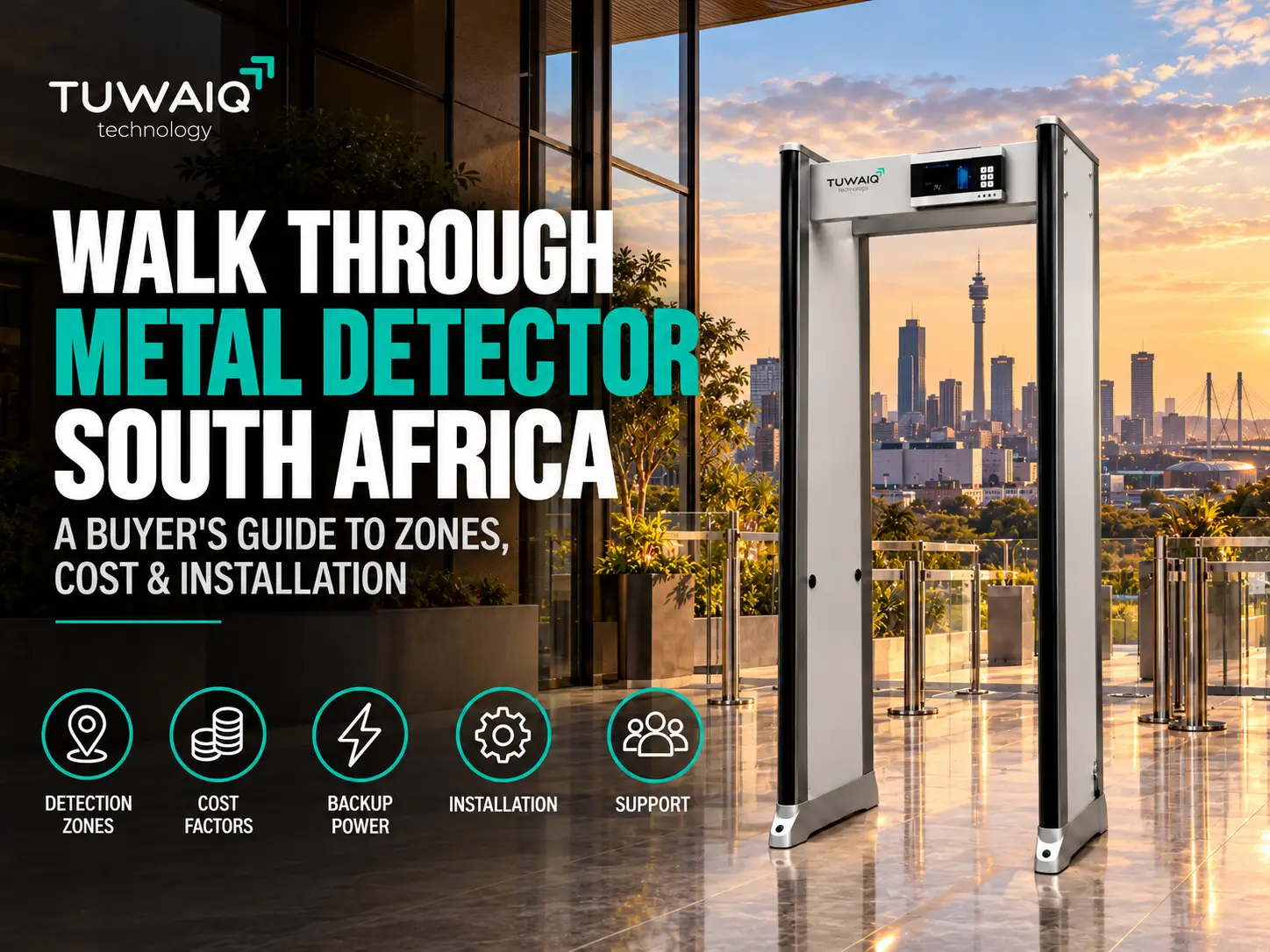
Walk Through Metal Detector South Africa: Buyer's Guide to Zones, Cost and Installation
A walk-through metal detector in South Africa should be chosen for the entrance where it will operate. A mall screening shoppers, a mine checking a shift change and a school receiving students have different traffic patterns, carried items and follow-up procedures. The best specification starts with those differences.
For buyers researching a walk through metal detector in South Africa, zone count and purchase cost are useful starting points. They do not tell the whole story. Installation conditions, power arrangements, operator training and service responsibilities can have just as much effect on daily use.
This guide explains what to assess, how to approach the cost discussion and what to prepare before requesting a quotation.
What a walk-through metal detector does
A walk-through metal detector screens a person passing through its detection field for metallic objects that meet the configured detection criteria. When it alarms, trained staff follow the site’s procedure to identify and resolve the cause.
A multi-zone model also indicates an approximate alarm location. This can help direct a follow-up inspection, but the indication is not an image of an object and does not identify its purpose.
The gate is one part of an entrance process. It does not inspect the contents of a bag in the way an X-ray scanner does. A site that screens both people and belongings should plan the two routes together and define when a person is cleared to enter.
Begin by reviewing the walk-through metal detector range, then compare the exact proposed configurations against your site requirements.
Which South African sites should consider a gate?
Malls and shopping centres
Mall buyers should assess visitor arrivals, entrance width, accessible circulation and the screening tasks required by the security plan. People may arrive in groups and carry shopping bags, phones, keys or other everyday metal items.
Provide clear preparation instructions and a separate place for alarm resolution. If every follow-up check happens inside the gate, the entrance can stop moving even when the detector itself is functioning properly.
Plan staff positions so visitors know when to enter and where to go afterwards. Include the bag-checking procedure and prevent the collection area from blocking the next visitor.
Mines and industrial sites
At mines and industrial facilities, first define the objective. Screening for prohibited metallic items at entry and controlling the movement of company materials at exit are different applications. Neither should be reduced to a generic sensitivity setting.
Work clothing, protective equipment, approved tools and the materials people routinely carry affect the screening process. Demonstrate the proposed detector using representative conditions and site-approved test items before accepting a configuration.
Assess dust, moisture, nearby machinery, vibration and the physical protection needed for the installation. A detector intended for a sheltered reception point may not suit an exposed industrial entrance. Ask for written environmental specifications for the complete installed system.
Government buildings
Government entrances often combine visitor registration, access checks and screening. The layout should make the sequence clear and maintain supervision between the public queue and controlled area.
Include a secondary inspection position and a procedure for visitors needing assistance. Staff should know who can authorize access after an alarm and how unresolved cases are escalated.
Do not select equipment solely because another building uses a similar-looking gate. The required detection performance and operating procedure must come from the project’s own security brief.
Schools and education sites
School screening requires a practical arrival plan that staff can explain consistently. Consider the morning surge, school bags, staff entrances and how follow-up checks will be handled with appropriate supervision and privacy.
The school should establish its safeguarding and screening procedures before installation. Equipment selection should support those procedures, including an assisted route where the ordinary passage cannot be used.
Allow time for staff practice before the first busy arrival period. A well-planned entrance depends on clear instructions and responsible alarm handling as much as on equipment controls.
Events and temporary venues
For events, consider the admission window and group arrivals rather than daily footfall. Staff need a clear queue plan, an alarm-resolution area and a way to handle bags within the event’s entry policy.
Temporary equipment needs suitable placement and power, protection appropriate to the environment and a commissioning check after each installation. Include dismantling, storage and transport arrangements when assessing the overall purchase or deployment scope.
What affects the cost of a walk-through metal detector?
The useful comparison is the cost of a complete working checkpoint. Ask suppliers to separate equipment, accessories, delivery, installation, training and ongoing service so that quotations cover the same scope.
Number of detection zones
Zone count affects the detail available to staff when locating an alarm. More detailed localization may be valuable where staff need to resolve frequent alarms efficiently, but zone count alone does not establish detection performance.
Compare the proposed zone arrangement with your screening procedure. Paying for additional detail makes sense when operators can use it and the detector performs satisfactorily in the intended environment.
Build quality and environmental suitability
Frame construction, stability, finishes, connectors and protection against the operating environment affect the equipment specification. Frequent relocation can create different demands from permanent indoor use.
Ask what environmental rating applies, which components it covers and whether a canopy or other protection is required. Do not interpret a model name as evidence that every part of the installation can remain exposed to weather.
Sensitivity settings and control functions
Configurable detection programs, supervisor access controls and alarm settings can affect equipment scope and commissioning work. Buyers should understand who can change settings and how the approved operating configuration will be protected.
The objective is reliable performance against the site’s defined detection requirement. Reducing sensitivity simply to shorten a queue can compromise that requirement. Any adjustment should be authorized and verified through the agreed procedure.
Power and backup power
Confirm the detector’s electrical requirements, the site’s available supply and the proposed backup arrangement. Ask whether a battery is included, optional or unavailable for the quoted configuration, and request documented runtime conditions where applicable.
If an external backup supply is proposed, have the supplier and site electrical team confirm compatibility and the intended operating duration. Include the remaining checkpoint equipment in the plan; keeping only the gate powered may not keep the entrance operational.
Installation and commissioning
Delivery to the premises is different from a commissioned installation. The proposal should identify assembly, positioning, any fixing requirements, site testing and coordination with nearby equipment.
Existing metalwork, moving doors, electrical installations and adjacent detectors may influence placement. A site survey helps establish whether preparation work is required and who will perform it.
Training, maintenance and support
Operator training, supervisor training, refresher sessions and documented operating checks should be priced and described clearly. Ask whether training covers actual checkpoint practice as well as the control panel.
Compare warranty terms, preventive maintenance, support hours, travel charges and replacement-part arrangements. Confirm who will attend the specific South African site and how service will be arranged. Do not assume that a supplier’s general regional presence includes local attendance under your quotation.
To obtain a meaningful cost for your application, send Tuwaiq Technology the site type, number of lanes, installation environment, expected arrival pattern and service requirements, and request an itemized quotation.
How many zones do you need?
Choose the amount of alarm-location detail your operators need. A site with modest traffic and a well-staffed follow-up process may have different priorities from a busy entrance where many people arrive together.
Ask the supplier to demonstrate how the display identifies an alarm and how staff would use that information during secondary screening. Evaluate performance across the passage under an agreed test procedure, rather than judging only the number printed on the brochure.
The INSPECTA 45Z product page describes a 45-zone model. Buyers can also review the INSPECTA 8WPZ and request its current technical documentation before making a shortlist. Confirm specifications and environmental suitability for each proposed configuration.
For the detailed explanation, read how many zones you need in a multi-zone walk-through metal detector.
Plan the entrance before installation
Draw the queue, preparation area, gate, staff positions, secondary screening space and the controlled exit from the checkpoint. If bags are screened separately, show how people remain associated with their belongings.
Provide enough space for a person receiving a follow-up check without obstructing the gate. Keep emergency routes clear and agree on an assisted screening procedure for anyone unable to use the normal passage.
The installer should review nearby metal objects and electrical equipment, then follow the manufacturer’s placement instructions. If several gates are installed together, ask for the required spacing and any coordination settings to be confirmed for the selected model.
Use the walk-through metal detector installation guide as a preparation reference. Its UAE context does not establish requirements for a South African project; confirm your site’s requirements separately.
Add handheld screening to the operating plan
A handheld detector can help trained staff investigate a walk-through alarm. It should have a designated operating position, a documented method of use and a routine readiness check.
Plan how staff will manage ordinary metal items, explain the next step and escalate unresolved alarms. The handheld process should support the security requirement while treating visitors consistently.
Read handheld vs walk-through metal detectors for a closer explanation of their different roles. If bags are part of the screening scope, specify their inspection process alongside the gate and handheld arrangement.
Verify the installation before handover
Agree on the acceptance process before placing the order. At handover, confirm the installed model, accessories and settings, then demonstrate operation under the intended site conditions.
Use agreed test items and procedures to assess the detection requirement and alarm indications. Include normal pedestrian movement, nearby doors and adjacent equipment where relevant. Record the configuration and any installation limitations so later changes can be reviewed properly.
Operators should practice a full sequence: preparation, passage, alarm response, secondary screening and release. Supervisors should receive the operating documents, maintenance instructions and service contacts.
Prepare a quotation brief
Before contacting a supplier, gather the entrance drawing, screening objective, peak arrival pattern, normal carried items, operating hours and environmental conditions. Add the available power arrangement, preferred backup duration and the support needed after installation.
Ask for a written equipment schedule and a clear division of responsibility between the buyer, installer and service provider. Confirm project requirements before ordering and request the supporting documents your project needs.
The final proposal for your South African site should explain how the walk-through metal detector will work at the actual entrance. Explore Tuwaiq Technology’s Africa page and submit your site brief to request a configuration and quotation with installation, training and support clearly defined.
FAQ
ask us
anything
What affects walk-through detector cost?
Zone configuration, construction, environmental suitability, power backup, installation, training and service scope affect the quotation.
Does a higher zone count guarantee better detection?
No. Zones indicate approximate alarm location; detection performance also depends on configuration, installation conditions and the screening requirement.
Which model should a mine consider?
Define the screening objective and demonstrate equipment with representative work clothing, approved tools and site conditions before selection.
Is backup power included?
Confirm the quoted configuration. Ask about available battery options or a compatible external backup arrangement and documented operating conditions.
Can a gate be installed outdoors?
Confirm environmental specifications for the complete installation and any protective measures required at the actual entrance.
Why use a handheld detector?
It can help trained staff investigate gate alarms at a designated secondary screening position under the site procedure.
How can I request a quote?
Provide your site type, lane count, environment, peak arrival pattern and required installation, training and support scope.