

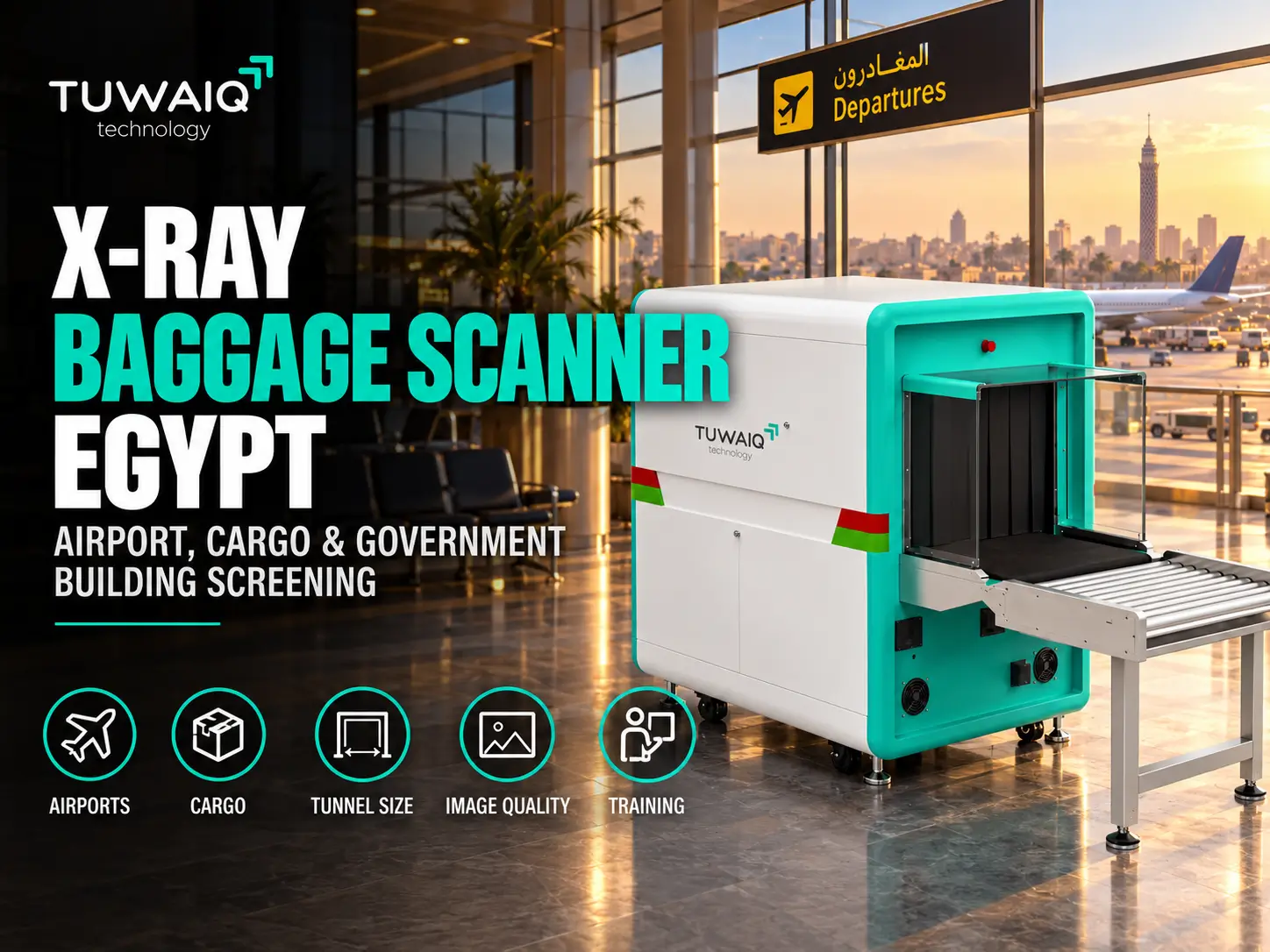
X Ray Baggage Scanner Egypt: Airport Screening Needs as Cairo Airport Expands
Egypt’s airport expansion plans provide a useful starting point for X ray baggage scanner buyers. On 1 September 2026, Egyptian Streets reported plans for a new Terminal 4 at Cairo International Airport, with a reported design capacity of up to 40 million passengers annually. The article described a planned expansion, so that capacity should be treated as a project target rather than an operating result.
AGBI’s August 2026 report, excerpted by the British Aviation Group, also reported plans to expand Cairo’s airport capacity. Separately, the Cairo Governorate portal reported a review of airport upgrades across Egypt, including work concerning Cairo, Luxor, Alexandria and El Alamein.
For buyers researching an X ray baggage scanner in Egypt, the practical implication is to specify screening around the operation being built or upgraded. Passenger checkpoints, hold-baggage systems and cargo facilities have distinct requirements. A larger terminal does not automatically point to one scanner type or one equipment quantity.
Start by separating the screening applications
Before comparing machines, identify what is being screened, where it enters the controlled area and which team makes the clearance decision. An airport can have several screening operations within the same estate.
Passenger cabin baggage usually passes through a checkpoint where people prepare belongings, staff review images and bags are returned to their owners. Hold baggage moves through a different handling process and may need integration with conveyors, tracking and alarm-resolution systems. Cargo can include large cartons, consolidated shipments and loads with challenging density or dimensions.
Staff entrances, service deliveries and administrative buildings create further requirements. Some may need standalone screening, while others form part of a wider access-control arrangement.
Create a separate brief for each application. Specify the operating workflow, performance criteria, integration needs and project acceptance requirements before asking a supplier to recommend equipment.
Checkpoint scanners for passenger belongings
A passenger checkpoint needs a scanner suited to the bags people actually carry and a layout that lets staff control the screening decision. Tunnel size matters, but so do preparation space, tray handling and the collection area.
Record the common bag sizes and any recurring oversized items. Consider family groups, passengers carrying several belongings and people unfamiliar with the process. These factors affect the time needed to load, review and collect items.
The checkpoint baggage scanner range provides a starting point for equipment research. Ask for a demonstration using representative bags and the exact image functions included in the proposed configuration.
The demonstration should show how operators investigate an unclear image and retain control of the bag while another check is arranged. A visually impressive display is less useful if the real inspection and escalation process has not been considered.
Size the complete lane
The installed footprint includes more than the scanner cabinet. Allow for the preparation surface, conveyor extensions, operator station, bag collection and the route to secondary inspection.
Show how screened people reconnect with their belongings. Keep the public queue from crossing the controlled exit and provide an appropriate assisted route for passengers who cannot use the standard passage.
Planning this early helps avoid a common procurement problem: selecting a suitable machine and discovering later that the entrance has insufficient space to operate it properly.
Larger scanners for hold baggage
Hold-baggage screening is a distinct engineering and operational task. Bags may pass through a handling system that must preserve identification, route alarms correctly and move cleared baggage to the intended destination.
A larger tunnel may be needed for the intended baggage envelope, but physical fit is only one requirement. Buyers must establish the required screening technology and performance, project-specific acceptance conditions and interfaces with the baggage-handling system.
Do not treat a conventional large-tunnel X-ray scanner as automatically equivalent to an approved hold-baggage screening system. Obtain written confirmation of suitability for the exact application from the responsible project team before ordering.
For an expansion or retrofit, document the existing handling arrangement and the proposed changes. Ask how the system will manage rejected items, equipment downtime, maintenance access and the transition between old and new operations.
Commissioning should test the agreed interfaces and alarm workflows as well as the scanner itself. Responsibilities for the screening equipment, conveyors, controls and overall system acceptance should be clear in the purchase documents.
Cargo screening needs its own specification
Cargo buyers should begin with a load survey. Record routine carton dimensions, exceptional loads, package weights, packaging materials and the density of typical contents. Note whether items arrive individually, on pallets or as consolidated shipments.
The question is not simply whether a shipment fits through a tunnel. Staff also need to load it safely, obtain a useful image and manage any item that cannot be resolved through the normal process.
The INSPECTA 1010 large-tunnel scanner is one product to review when assessing larger parcels and bulky baggage. Match its current technical documentation to your load profile and application requirements before shortlisting it.
Check weight and handling together
Conveyor load capacity should be assessed against the way weight is distributed, not just the total weight of a shipment. Confirm any restrictions affecting point loads, handling aids or loading equipment with the supplier.
Plan the transfer from receiving to the conveyor and from the conveyor to the cleared holding area. If a forklift or pallet truck is used nearby, separate vehicle movement from operators and visitors through the site’s handling plan.
The largest exceptional shipment may need a dedicated process. It should not force every smaller parcel through an oversized installation without a clear operational reason.
Test realistic cargo images
Dense contents and overlapping objects can make interpretation more demanding. Ask for representative test loads and a demonstration of the procedure used when the image is unclear or an area cannot be adequately assessed.
Record which image tools are included and which operator actions they support. Confirm whether proposed automated functions are standard, optional or dependent on separate software and service arrangements.
For aviation cargo, confirm the applicable project requirements for the screening method, configuration and operational process. General product suitability for logistics does not establish acceptance for every air-cargo use.
Single view or dual view?
A single-view scanner provides one projection of an item. A dual-view scanner provides two projections from different angles, giving the operator additional information when contents overlap.
Neither choice removes the need for trained image interpretation and a procedure for unresolved items. Select the configuration against the application and required performance, then evaluate it using representative baggage or cargo.
Read the detailed single-view vs dual-view X-ray baggage scanner guide when preparing the specification. Keep the decision separate from tunnel size: view configuration and physical load capacity answer different questions.
Walk-through gates for people screening
Bag screening and person screening should operate as a coordinated checkpoint. A walk-through metal detector screens people for metallic objects under its configured criteria, while the X-ray scanner supports inspection of their belongings.
Provide a preparation position before the two routes separate. Staff should direct each person through the gate and ensure their belongings remain under control while the screening decisions are made.
If the gate alarms, trained staff follow the site’s secondary procedure, which may include a handheld detector (see handheld vs walk-through metal detectors).
If the bag needs further inspection, staff follow the separate bag-resolution procedure. Clearance of one does not automatically clear the other.
At airport staff entrances, use the same planning discipline. Work items, shift patterns and the need to avoid delays at operational handovers should be included in the site brief. Any assistance procedure should be agreed before the checkpoint opens.
Ports and associated logistics facilities
Port environments may need to screen visitor bags, staff belongings, parcels and selected deliveries at controlled entrances. Define these streams separately from any requirement to inspect vehicles or full freight containers.
A baggage scanner should be matched to the items it is designed to handle. It should not be described as a container-inspection solution merely because it is installed within a port estate.
Consider the receiving environment, including dust, moisture, temperature and proximity to heavy handling equipment. Locate the operator station where staff can work effectively and where vehicle movements do not interfere with bag preparation or secondary checks.
Provide a clear route for items that exceed the scanner’s accepted dimensions or loading limits. The alternative process should be part of the screening plan before deliveries begin.
Government buildings and public reception areas
Government-building buyers should focus on the complete visitor journey: registration, preparation, person screening, bag inspection and controlled entry. Where staff and deliveries use other entrances, include those routes in the security assessment.
Select tunnel size from the actual mix of handbags, laptop bags, document cases and delivered parcels. A compact reception area may need a carefully arranged collection position and a separate surface for secondary bag examination.
Explain the process through clear signs and staff instructions. A predictable sequence reduces unnecessary movement and helps visitors understand when to collect belongings and proceed.
Turn airport growth into a practical buying brief
Expansion announcements provide context, but equipment quantities should come from the project’s operating model. Annual passenger targets do not directly determine the number of screening lanes.
Review the busiest scheduled arrival periods, the number and type of items per person, image-review workload and the capacity of secondary inspection. Consider staffing, breaks, maintenance and how the operation will respond if a lane is unavailable.
For cargo, use shipment arrivals and handling patterns rather than passenger forecasts. For hold baggage, coordinate with the baggage-system designers and the responsible security team.
A strong brief should identify the exact application, item envelope, load limits, operating hours, layout, required interfaces and acceptance process. Include the expected installation date and any need to phase work around an operating facility.
What to ask before buying an X ray baggage scanner in Egypt
Ask suppliers to provide an equipment schedule, layout drawing and clearly itemized scope. Confirm who is responsible for delivery, unloading, electrical preparation, installation and commissioning at the Egyptian site.
Request operator and supervisor training that covers the actual workflow. Confirm access to spare parts, preventive maintenance arrangements, service attendance and warranty exclusions in writing.
Ask for the technical and safety documents required for project review. Confirm the project’s approvals and acceptance conditions before ordering, particularly for regulated airport screening applications.
Review the complete X-ray baggage scanner range and Tuwaiq Technology’s Africa page to begin a product enquiry. Send the site brief and request a proposed configuration with delivery, training and support terms for Egypt. Evaluate that proposal against the defined application, rather than assuming that a general airport-growth announcement specifies the equipment your facility needs.
FAQ
ask us
anything
What has been reported about Cairo Terminal 4?
Egyptian Streets reported a planned terminal expansion in September 2026. Its reported capacity is a project target, not an operating result.
Are checkpoint and hold-baggage scanners interchangeable?
No. Confirm application-specific performance, integration and acceptance requirements before selecting equipment for either screening process.
How should cargo scanner size be chosen?
Measure routine loads, exceptional items, weight distribution and safe loading arrangements, then test representative contents.
What does dual view add?
Two projections provide different perspectives on contents. Trained interpretation and a procedure for unresolved items remain necessary.
Do bags and people need separate checks?
Yes, where both are in scope. Coordinate bag inspection and person screening before releasing visitors and their belongings.
Can baggage scanners inspect full containers?
Do not assume so. Vehicle and container inspection require equipment and methods specified for those applications.
What should an Egyptian buyer confirm?
Confirm project requirements, acceptance conditions, delivery, installation, operator training, spare parts and service responsibilities before ordering.